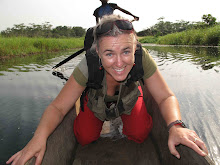
Please visit www.evagilliam.com for a current website for Eva Gilliam/Videograper.
Monday, October 7, 2019


Friday, January 18, 2013
Audio Slideshows - HOW TO
16JAN

http://blog.soundslides.com/
From blog.soundslides.com
written by Laura Read
Eva Gilliam’s audio slideshow checklist — Don’t leave home without it!
Editors can only do so much with the material they’re provided. Freelance audio slideshow and video producer Eva Gilliam, who lives in Cape Town, South Africa, and produces videos and audio slideshows for various news agencies and NGOs, likes to provide a checklist to photographers and reporters she works with. One late night on Skype, she shared her list with the Soundslides community. What do you have on your field checklist? Tell us in the comments section below.
Photography strategy
- Develop a rough scripting of the story before you go out: where is it, who are the characters, what are they doing?
- List the shots that will illustrate each step of the story.
- Prepare to photograph the situation from many angles. From each angle, be sure to get wide, medium and extreme close-up images. “Close-ups give you emotion; wide shots give you context,” Gilliam says. The variation between close-up, medium and wide provides overall texture in the audio slideshow.
- Get close-up images of the objects, settings and situations around the subject that can fill out the story in interesting ways.
- Show broader context by getting general wide shots of the place.
Audio recording strategy
- Gather at least two minutes of ambient sound from of each of the main locations.
- Record segments of each interview subject making his or her own introduction. “I always get an introduction of the person saying ‘Hi my name is ####. I’m ### years old and I live in ###,’” Gilliam says. “This has two purposes. One is, I don’t forget to include the person’s name in the slideshow. The second is, I’ve gotten the person’s consent. If they’re giving their name and everything on mic, they’re giving their consent; you don’t need a consent form. It’s also a really nice way to introduce someone in the audio slideshow, to have the person telling you who they are, as opposed to (presenting) a name on a screen.”
- Record some local music if you can. “It can be someone singing on the streets, kids singing at school,” she says. “Find music that matches the story.”
Keep this in mind for sound
- Pay attention to noises in the background of your interview. Make sure they work with the tone and subject of the interview.
- “Protecting that interview sound is important,” Gilliam says. If it’s noisy, “pull someone aside or go behind a building, and watch out for wind or any background noise. Don’t hold the mic so close to the person that you get distortion or pops when the person is speaking.”
- Good recording devices include Moranz or Roland RO5.
Check out more of Eva Gilliam’s audio slideshows and videos at the Children’s Radio Foundation.
For more information on Gilliam, read her blog.
— Interview and story by Laura Read
http://blog.soundslides.com/
Friday, November 16, 2012
Social Intelligence Reporting: A new approach to Social Service Delivery in Kenya
Social Intelligence Reporting (SIR) is a Kenya Government/UNICEF initiative aimed to
enhance social service delivery – the services of health facilities,
schools and the provision of safe drinking water.
This 5 minute video is a short version of a 26 minute piece made for UNICEF Kenya, to be broadcast on national television in English and Swahili.
If you would like further information on how to see the full-length version, please let me know!
VIDEO TO BE UPLOADED SHORTLY....
Inside Somalia: Violence against women and girls
Another collaboration with photographer Kate Holt and UNICEF. This audio slide show aims to bring to light the devastating plight of women and girls who are constantly at risk of Sexual and Gender-based violence in Somalia.
Photos by Kate Hold
Montage by Eva Gilliam
Music by the Color of Sound
Link to Guardian: http://www.guardian.co.uk/global-development/video/2012/oct/30/somalia-refugee-camps-women-audio-slideshow?fb=native
Photos by Kate Hold
Montage by Eva Gilliam
Music by the Color of Sound
Link to Guardian: http://www.guardian.co.uk/global-development/video/2012/oct/30/somalia-refugee-camps-women-audio-slideshow?fb=native
Tuesday, May 1, 2012
Two Drops - Stop Polio!
Photographer Kate Holt and I put together this short piece on the men and women committed to fighting polio in Chad during our visit with UNICEF in April 2012.
The country had more confirmed cases of the diseases in 2011, than all cases combined since 2003.
The country had more confirmed cases of the diseases in 2011, than all cases combined since 2003.
Tuesday, April 24, 2012
In Chad, UNICEF and partners step up emergency response to food crisis
N’DJAMENA, Chad, 11 April 2012 – Khadija’s 6-month-old son, Nawal, had
been suffering from vomiting and diarrhoea for days, but she thought it
was related to his teething. Finally, when his fever did not go down,
she brought him to a clinic in N’Djamena, where he was diagnosed with
severe acute malnutrition.
Even in a normal year, Chad has one of the highest rates of chronic malnutrition in the world. The region experiences a yearly ‘lean’ or ‘hunger’ season, and according to UNICEF data from 2010, 15.7 per cent of children under age 5 were already suffering from severe acute malnutrition.
But in 2011, the rains did not come.
The failed rains, coupled with low crop yields, are causing a dramatic increase in rates of malnutrition – not only in Chad, but throughout the Sahel region.
Read the full article here.
Even in a normal year, Chad has one of the highest rates of chronic malnutrition in the world. The region experiences a yearly ‘lean’ or ‘hunger’ season, and according to UNICEF data from 2010, 15.7 per cent of children under age 5 were already suffering from severe acute malnutrition.
But in 2011, the rains did not come.
The failed rains, coupled with low crop yields, are causing a dramatic increase in rates of malnutrition – not only in Chad, but throughout the Sahel region.
Read the full article here.
Monday, April 23, 2012
In Abidjan, Côte d'Ivoire, assisting children alone in the big city - February 2012
UNICEF’s flagship report, ‘The State of the World’s Children 2012: Children in an Urban World," launched at the end of February, focusing attention on children in urban areas. One billion children live in urban areas, a number that is growing rapidly. Yet disparities within cities reveal that many lack access to schools, health care and sanitation, despite living alongside these services.
This story is part of a series highlighting the needs of these children.
ABIDJAN, Côte d'Ivoire, 21 February 2012 – After a fight with his father, 9-year-old Junior Coulibaly left his house in a huff. It was a Friday afternoon in mid-January 2011. Nine months would pass before he would see his father again.
Junior was playing in his neighbourhood of Yopougon, one of the country’s largest slums, when conflict erupted – the result of tension that had been building since the presidential elections six weeks earlier.
Read complete article here.
Somalia 2011
Below is a selection of stories from my time working with the UNICEF Somalia communications team. These stories were shot by Mohamed Sheik Nur in Mogadishu, and written and edited by myself.
Child Friendly Spaces in Mogadishu
When they arrived, little Moktar was just skin and bones, one of the hundreds of thousands of children in Somalia suffering from serious malnutrition.
Read the full article and watch the video here.
Child Friendly Spaces in Mogadishu
MOGADISHU, Somalia, 9 November 2011 - For hundreds of thousands of displaced Somali children, daily life is a mixture of fear and insecurity. Communities break apart, as one by one families leave their villages to flee ongoing conflict. If they survive the journey to Mogadishu, life is not much easier, as they are faced with the daily challenge of finding food and shelter.
For children, this experience can be traumatizing. Having fled their homes in search of safety, they find themselves in overcrowded camps, away from all they know.
Read full article here.Crisis continues 100 days after famine was declared in Somalia
NAIROBI, Kenya, 28 OCTOBER 2011 – Just two months ago, three-year-old Moktar Mohamed was on the verge of death. After his parents lost their livestock and crops to the drought, they travelled by foot and truck from Middle Shabelle to Mogadishu, a trek of over 100 kilometres.When they arrived, little Moktar was just skin and bones, one of the hundreds of thousands of children in Somalia suffering from serious malnutrition.
Read the full article and watch the video here.
Saturday, July 16, 2011
South Africa: Students stage “sleep-in” to get basic infrastructure in South Africa’s Schools
Students stage “sleep-in” to get basic infrastructure in South Africa’s Schools
Nearly 100 High School students, parents and education activists are holding what they are calling a “sleep-in” outside of the South African parliament. They are calling on the Minister of Basic Education to adopt a Norms and Standards protocol for the country’s schools. Students say the overwhelming lack of basic infrastructure, including toilets, electricity and running water, is unacceptable. And they are willing to sleep on parliament’s doorstep until they get results.RFI - 14 July 2011
Monday, June 6, 2011
Will the next Einstein be African?
Could Africa be the home of the next Albert Einstein?
That’s certainly the belief of the founders of Next Einstein Initiative at the African Institute for Maths and Science in South Africa.
The initiative aims to accelerate higher education in math and science across Africa by opening centres of excellence for the continent's untapped bright youth.
The Next Einstein Initiative is the third report in EuroNews' weekly Learning World Programme:
Learning World: Educating Tomorrow's Scientists.
Broadcast March, 2011.
That’s certainly the belief of the founders of Next Einstein Initiative at the African Institute for Maths and Science in South Africa.
The initiative aims to accelerate higher education in math and science across Africa by opening centres of excellence for the continent's untapped bright youth.
The Next Einstein Initiative is the third report in EuroNews' weekly Learning World Programme:
Learning World: Educating Tomorrow's Scientists.
Broadcast March, 2011.
Lesotho Cash Grants: A little goes a long way
Article and Video for UNICEF Lesotho (this dates back a bit, but I never posted it due to it's length, but now I will start to put up some of my longer work):
Lesotho cash-grants pilot programme aims to ensure vulnerable children’s rights
By Clelia Barbadoro and Eva Gilliam
In the run-up to 20 November 2009, the 20th anniversary of the Convention on the Rights of the Child, UNICEF is featuring a series of stories about this landmark international agreement on the basic human rights of all children – including progress made and challenges that remain.
Here is one of those stories.
LEBAKENG, Lesotho, 18 November 2009 – Mapalesa Sebatanyane, 73, is the primary caregiver for her four grandchildren, but she struggles to feed them with the small income she earns raising chickens in this remote village.
Recently, help arrived for Ms. Sebatanyane in the form of cash grants delivered by helicopter from the Child Grants Programme, an initiative of the Government of Lesotho, the European Union (EU) and UNICEF.
The right to social protection
The programme is now several months into its initial pilot phase. It aims to improve the well-being of vulnerable children – including those who have been affected by HIV and AIDS, and those who live in families struggling with poverty, food insecurity, undernutrition and lack of access to essential services.
Besides ensuring every child’s right to have such basic needs met, the Convention on the Rights of the Child states, in Article 29, that all children – either through their guardians or directly – have the right to help from the government if they are poor or in need.
“The future of Lesotho depends on how you treat your children,” EU Ambassador to Lesotho Peter Christiansen said at an October ceremony to launch the Child Grants Programme.
Endemic poverty
Half of the population of Lesotho lives below the poverty line, and the country has the world’s third-highest rate of HIV prevalence.
“We’ve had a very high maternal and infant mortality rate in this area and others that we have chosen to receive the grant,” said Lesotho’s Minister of Health and Social Welfare, Dr. Mphu Ramatlapeng.
“We have children looking after families and people not looking after their health,” he added, referring to households in which children as young as 12 years of age care for younger siblings. “These are some of the factors that have contributed to destitution generally in these areas.”
Around 950 households – comprising over 2,370 orphans and vulnerable children – are currently benefiting from the small quarterly grants. This monetary assistance is gradually being complemented by other services, such as World Food Programme assistance and psychosocial support for families and children affected by HIV.
Along with large households like Ms. Sebatanyane’s that are unable to make ends meet on the income of a single provider, many child-headed households are beneficiaries of the grants programme.
The face of need
Mpolokeng, an 18-year-old girl, and Sello, an 18-year-old boy, come from different areas but have much in common. Both lost their parents; both are heading their households and struggling to make ends meet; and both were waiting to receive their cash grants last month in Semonkong, central Lesotho.
“My father was a very strong man,” Mpolokeng recalled with a smile. “I used to be so happy every time he came home from the mines [in South Africa], because he used to bring us fresh apples, sweet potatoes and gifts.
“But over time,” she added, “he started getting sick and finally came home for good, to die. Then my mother got sick and I had to take care of her and my siblings, and had to drop out of school.”
Sello’s father also worked in the mines until he, too, became ill and died. “I miss him,” said Sello. “When he died, my mother followed, so we used some of our cattle for the funerals. I had to take care of the remaining cattle and of my siblings.”
Children confront triple threat
Mpolokeng and Sello are just two of thousands of Basotho children confronted with enormous odds. The triple threat of poverty, HIV and AIDS, and food insecurity has dealt a serious blow to child survival, development and protection in Lesotho.
More than 160,000 children are orphans, robbed of the protective and nurturing role of their mothers and fathers. Of these, 110,000 are estimated to have lost one or both parents to AIDS.
Despite the challenges they face, Mpolokeng and Sello are astoundingly resilient. Both have hopes and dreams for the future and were excited at the possibilities offered by the cash grants they were about to receive.
“My greatest wish is to go back to school, so that one day I can become a teacher and help other children learn and grow,” said Mpolokeng. “The money I will receive today will help me to buy myself a uniform so that next year, I can enrol in school again.”
Sello is following his father’s legacy to make sure his siblings have a better future. He plans to use the money to replenish his stock of cattle.
Successful pilot programme
The disbursement in Semonkong marked the first complete payment covering all three communities in the cash-grants pilot programme: Matelile (Mafeteng district), Lebakeng (Qacha’s Nek district) and Semonkong (Maseru district).
Lesotho’s Deputy Principal Secretary of Health and Social Welfare, Moliehi Khabele, explained that the pilot phase is meant to develop and test effective systems for targeting, enrolment, payment to beneficiaries, monitoring, procurement and financial management – as well as training of stakeholders, public awareness and community involvement.
The pilot programme will be refined for a phased rollout in other districts of the country by 2011. In the longer term, the government plans to absorb the programme into its national budget.
“Cash transfers have the greatest impact when combined with other social services such as health, nutrition, education and protection,” said UNICEF Representative in Lesotho Dr. Ahmed Magan. “The grants are part of a greater child-sensitive social protection programme that will benefit entire families.”
Lesotho cash-grants pilot programme aims to ensure vulnerable children’s rights
By Clelia Barbadoro and Eva Gilliam
In the run-up to 20 November 2009, the 20th anniversary of the Convention on the Rights of the Child, UNICEF is featuring a series of stories about this landmark international agreement on the basic human rights of all children – including progress made and challenges that remain.
Here is one of those stories.
LEBAKENG, Lesotho, 18 November 2009 – Mapalesa Sebatanyane, 73, is the primary caregiver for her four grandchildren, but she struggles to feed them with the small income she earns raising chickens in this remote village.
Recently, help arrived for Ms. Sebatanyane in the form of cash grants delivered by helicopter from the Child Grants Programme, an initiative of the Government of Lesotho, the European Union (EU) and UNICEF.
The right to social protection
The programme is now several months into its initial pilot phase. It aims to improve the well-being of vulnerable children – including those who have been affected by HIV and AIDS, and those who live in families struggling with poverty, food insecurity, undernutrition and lack of access to essential services.
Besides ensuring every child’s right to have such basic needs met, the Convention on the Rights of the Child states, in Article 29, that all children – either through their guardians or directly – have the right to help from the government if they are poor or in need.
“The future of Lesotho depends on how you treat your children,” EU Ambassador to Lesotho Peter Christiansen said at an October ceremony to launch the Child Grants Programme.
Endemic poverty
Half of the population of Lesotho lives below the poverty line, and the country has the world’s third-highest rate of HIV prevalence.
“We’ve had a very high maternal and infant mortality rate in this area and others that we have chosen to receive the grant,” said Lesotho’s Minister of Health and Social Welfare, Dr. Mphu Ramatlapeng.
“We have children looking after families and people not looking after their health,” he added, referring to households in which children as young as 12 years of age care for younger siblings. “These are some of the factors that have contributed to destitution generally in these areas.”
Around 950 households – comprising over 2,370 orphans and vulnerable children – are currently benefiting from the small quarterly grants. This monetary assistance is gradually being complemented by other services, such as World Food Programme assistance and psychosocial support for families and children affected by HIV.
Along with large households like Ms. Sebatanyane’s that are unable to make ends meet on the income of a single provider, many child-headed households are beneficiaries of the grants programme.
The face of need
Mpolokeng, an 18-year-old girl, and Sello, an 18-year-old boy, come from different areas but have much in common. Both lost their parents; both are heading their households and struggling to make ends meet; and both were waiting to receive their cash grants last month in Semonkong, central Lesotho.
“My father was a very strong man,” Mpolokeng recalled with a smile. “I used to be so happy every time he came home from the mines [in South Africa], because he used to bring us fresh apples, sweet potatoes and gifts.
“But over time,” she added, “he started getting sick and finally came home for good, to die. Then my mother got sick and I had to take care of her and my siblings, and had to drop out of school.”
Sello’s father also worked in the mines until he, too, became ill and died. “I miss him,” said Sello. “When he died, my mother followed, so we used some of our cattle for the funerals. I had to take care of the remaining cattle and of my siblings.”
Children confront triple threat
Mpolokeng and Sello are just two of thousands of Basotho children confronted with enormous odds. The triple threat of poverty, HIV and AIDS, and food insecurity has dealt a serious blow to child survival, development and protection in Lesotho.
More than 160,000 children are orphans, robbed of the protective and nurturing role of their mothers and fathers. Of these, 110,000 are estimated to have lost one or both parents to AIDS.
Despite the challenges they face, Mpolokeng and Sello are astoundingly resilient. Both have hopes and dreams for the future and were excited at the possibilities offered by the cash grants they were about to receive.
“My greatest wish is to go back to school, so that one day I can become a teacher and help other children learn and grow,” said Mpolokeng. “The money I will receive today will help me to buy myself a uniform so that next year, I can enrol in school again.”
Sello is following his father’s legacy to make sure his siblings have a better future. He plans to use the money to replenish his stock of cattle.
Successful pilot programme
The disbursement in Semonkong marked the first complete payment covering all three communities in the cash-grants pilot programme: Matelile (Mafeteng district), Lebakeng (Qacha’s Nek district) and Semonkong (Maseru district).
Lesotho’s Deputy Principal Secretary of Health and Social Welfare, Moliehi Khabele, explained that the pilot phase is meant to develop and test effective systems for targeting, enrolment, payment to beneficiaries, monitoring, procurement and financial management – as well as training of stakeholders, public awareness and community involvement.
The pilot programme will be refined for a phased rollout in other districts of the country by 2011. In the longer term, the government plans to absorb the programme into its national budget.
“Cash transfers have the greatest impact when combined with other social services such as health, nutrition, education and protection,” said UNICEF Representative in Lesotho Dr. Ahmed Magan. “The grants are part of a greater child-sensitive social protection programme that will benefit entire families.”
Tuesday, January 18, 2011
25,000 Ivoirian Refugees in Liberia - Food and Water Scarce
Nine year-old Sanata was home alone when chaos erupted in her village on the western border of Ivory Cost and Liberia. Sanata’s parents were working in the fields and her brothers and sisters were out when the neighbours decided to run from the village and across the Nior river into Liberia – a long days walk under a baking sun.
Following the elections in Ivory Coast last November, many villages like Sanata’s experienced confusion, and fear that there would be violence when the two presidential candidates both claimed legitimate victory in early December.
Many Iviorians crossed into Liberia as early as 28 November – some seeing continued stalemate and growing aggression in the capital of Abidjan as the dangerous next step to another civil war.
To date UNHCR has registered Ivoirian 25,088 refugees in Liberia. A report from the Liberian-Ivoirian border For UNICEF (January 2011).
Children the Key to Adult Literacy in Mozambique
The legacy of colonization left Mozambique with a staggering 97% illiteracy after independence in 1975.
Since then, the government has managed to reduce illiteracy to just under 50% - but the lack of basic reading, writing and arithmetic for much of the population remains an immense challenge for the country's development.
An innovative programme working with children, however, is turning that around.
A UNESCO Initiative that came about in 2003, the Government has taken the reigns and is now rolling out the programme nationally. Children are taking the lead, teaching their parents a thing or two.
For: EuroNews: Learning World (Nov/Dec 2011)
Wednesday, March 17, 2010
Republic of Congo - Refugees from DRC
In February 2010, UNICEF brought me to the north of Republic of Congo, to report on the situation of refugees. Here are some of the reports from that trip.
Republic of Congo - Refugees from DRC flood Likouala
The province of Likouala in northern Republic of Congo, is home yet again to tens of thousands of refugees from neighbouring Democratic Republic of Congo.
You can watch the entire FOCUS programme on this subject on France24
In English:
http://www.france24.com/en/20100302-life-in-limbo-for-DRC-refugees
In French:
http://www.france24.com/fr/20100302-focus-congo-la-crise-des-refugies-congolais-kinshasa-brazzaville-afrique
Video Produced for France 24:
Video Produced for UNICEF on the situation of education for refugee children in Likouala:
Republic of Congo - Refugees from DRC flood Likouala
The province of Likouala in northern Republic of Congo, is home yet again to tens of thousands of refugees from neighbouring Democratic Republic of Congo.
The United Nations High Commission for Refugees estimates so far that 117,000 thousand refugees have crossed the Ubangi River from the Democratic Republic of Congo into the Betou and Impfondo districts in the north of the Republic of Congo.
Many of these refugees were previously in the Republic of Congo for as long as 10 years. They fled the violence of the DRC’s Civil war and continued instability until DRC’s elections in 2006. The United Nations High Commission for Refugees officially completely their repatriation to DRC in 2008.
But Last October, clashes between the Boba and Lobala ethnic groups over access to farming and fishing rights in the area of Dongo in the DRC has again left many dead, wounded and tens of thousands running back to safety in the Republic of Congo.
You can watch the entire FOCUS programme on this subject on France24
In English:
http://www.france24.com/en/
In French:
http://www.france24.com/fr/
Video Produced for France 24:
Video Produced for UNICEF on the situation of education for refugee children in Likouala:
Wednesday, December 2, 2009
Wednesday, November 18, 2009
Wednesday, November 4, 2009
Kinshasa Music
In Kinshasa I met up with Mark Nunn and Joe Herrmann recording Ocean de la Clef, a band of young super-talented Kinois, working on a CD addressing various social issues for Christian AID. We collaborated for an afternoon and this is what we came up with. The song is SAVE, and talks about using condoms, but also about general access to medical care to know your status, take your meds and general watch out for yourself. Enjoy the music!
Ireland's Dustin the Turkey visits South Africa
Household name Dustin the Turkey visited South Africa from Ireland to investigate Early Childhood Development in KwaZuluNatal. The ECD programme of the LETCEE NGO is being used as a best model practice by UNICEF. This was good fun - the kids loved Dustin and KwazuluNatal is breathtaking!
A piece for UNICEF website and UNIFEED.
Tuesday, July 7, 2009
Cameroon - Silent Emergency
May 2009 trip to Cameroon with UNICEF, a silent emergency in Eastern Cameroon.
Click here to Watch the Video on YOUTUBE.
Ivory Coast May 2009
In May I went to Ivory Coast with UNICEF to cover the Tetanus Vaccination Campaign"
Sabra Seydou arrived at the Abobo Kennedy clinic in Abidjan with only a few minutes to spare before giving birth. This is her second visit to the Abobo Kennedy clinic in Abidjan since the beginning of her pregnancy. Extreme poverty has meant Sabra could not afford pre-natal tests or consultations. She was however able to have her first vaccination against tetanus, provided free by the Ivoirian government. Her second vaccination, that which would provide immunity against the deadly bacteria for her self and her unborn child, was scheduled for next week.....
Watch Video on YOUTUBE: Tetanus - Ivory Coast
Subscribe to:
Posts (Atom)